

International Zero Suicide Summit 2026
SafeSide Prevention works towards a vision of a world where every person is respected, connected, and giving to others. Here you can learn who we are, see what we’re building with partners across the world, and find the resources to take your next step.
Suicide Prevention in Systems
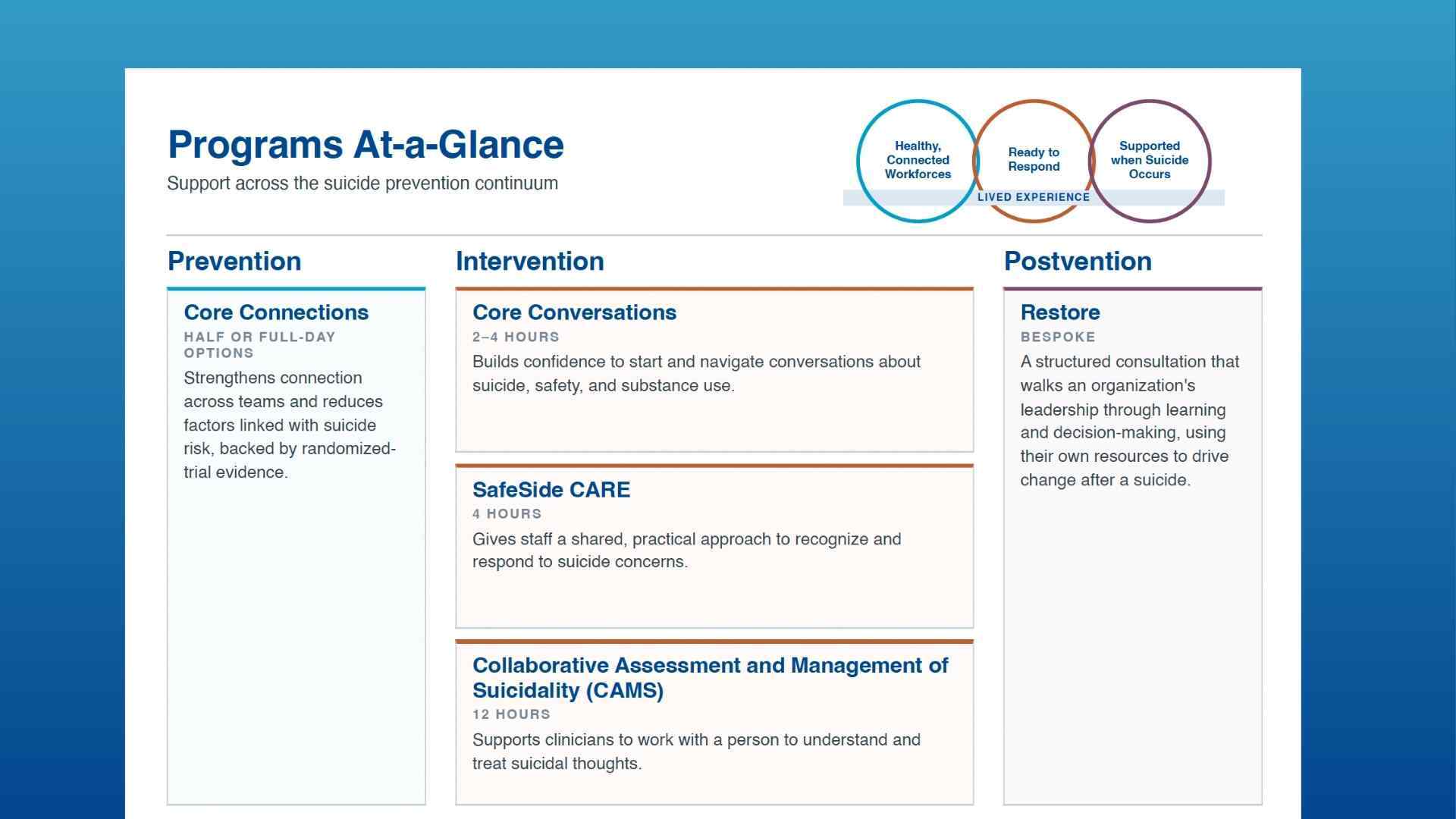
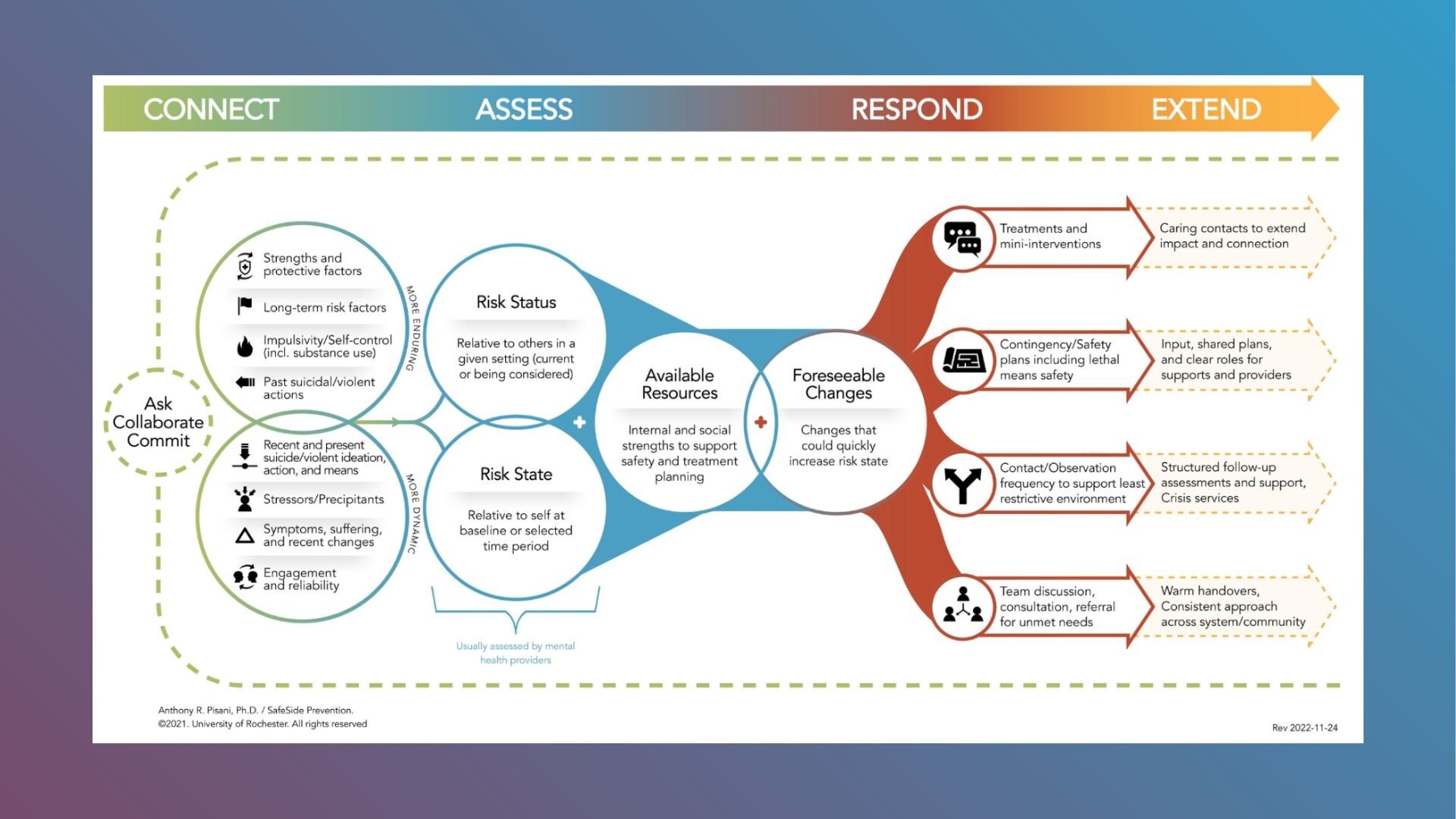
SafeSide Prevention delivers a systems-based approach to suicide prevention. SafeSide Prevention Founder and University of Rochester Professor Tony Pisani provides an overview of Suicide Prevention in Systems (Pisani, Moutier, & Stahl, 2021; Pisani & Boudreaux, 2023), how this relates to Zero Suicide, and the programs SafeSide offers to advance this approach.
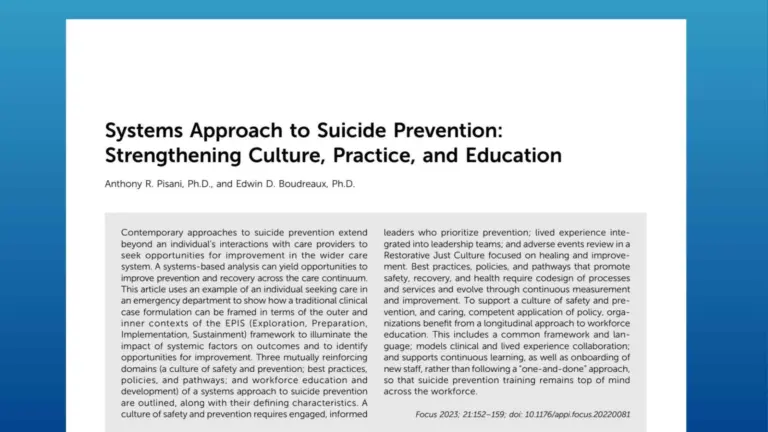
Systems Approach to Suicide Prevention: Strengthening Culture, Practice, and Education
Consistent, high-quality suicide prevention care requires understanding that each episode of care is embedded within a broader context. A systems-level approach is needed to address the structural and cultural issues that create barriers to effective care and to provide solutions that fit real-world work pressures and environments. By shifting our perspective to see suicide as also an outcome of imperfect interactions with systems, we can identify problems and seek solutions that move us closer to the aspirational goal of zero suicides. Read the full paper: Anthony R. Pisani, Ph.D., and Edwin D. Boudreaux, Ph.D.
Never the Same
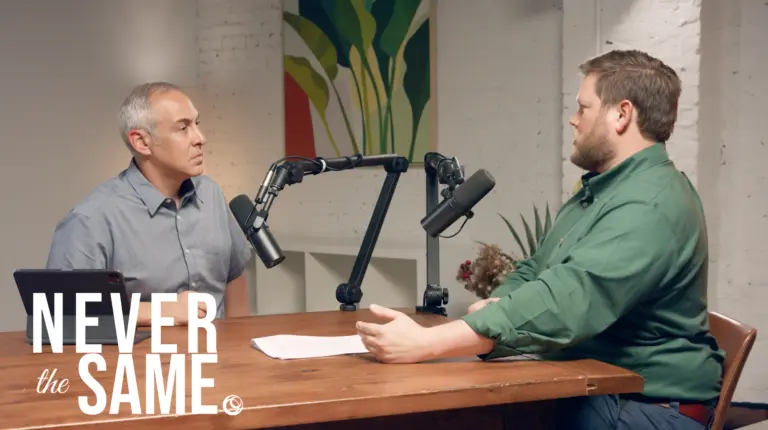
"Never the Same" is an interview-based podcast that explores the intersection of suicide prevention, career development, and life lessons. Inspired by Heraclitus' quote, "No man ever steps in the same river twice, for it's not the same river and he's not the same man," the podcast reflects on the ever-changing nature of life and personal growth.
Each episode features conversations with thought leaders from various fields, highlighting defining moments and transformative shifts in thinking. Through these dialogues, the podcast uncovers fresh insights for suicide prevention while offering broader perspectives on personal and professional evolution.
The shift from traditional risk assessment to collaborative, person-centered care is reshaping suicide prevention. In this inaugural episode of Never the Same, Professor Tony Pisani sits down with Dr. David Jobes, creator of the Collaborative Assessment and Management of Suicidality (CAMS), to discuss this transformative approach. Dr. Jobes shares insights from decades of work with patients and offers a glimpse into the life-changing potential of CAMS: "You can find a way through an incredibly dark moment and look back, saying, ‘Oh my god, I almost ended my life.’”
In this special episode of Never the Same, we share the full keynote address from host, Professor Tony Pisani, delivered at the Suicide Prevention Australia Conference earlier this year. Professor Pisani explores how the structure of our relationships—not just how supported we feel—can protect people from suicide risk. Drawing on studies in schools, the military, and health settings, he shows how strong, shared connections make a difference, especially when people don’t or can’t speak up.