
Confident Care. Connected Teams. Shared Approach.
SafeSide partners with clinical services to strengthen suicide prevention across teams, practice, and systems of care. Our solutions support staff wellbeing and connection, workforce confidence, consistent suicide-specific care, and restorative learning after critical incidents through programs including Core Connections, SafeSide CARE, CAMS, and Restore.
Clinical teams need approaches that support confident, consistent responses across a wide range of suicide-related presentations. The SafeSide Framework help services build shared understanding and practical decision-making across teams and roles.
Testimonials
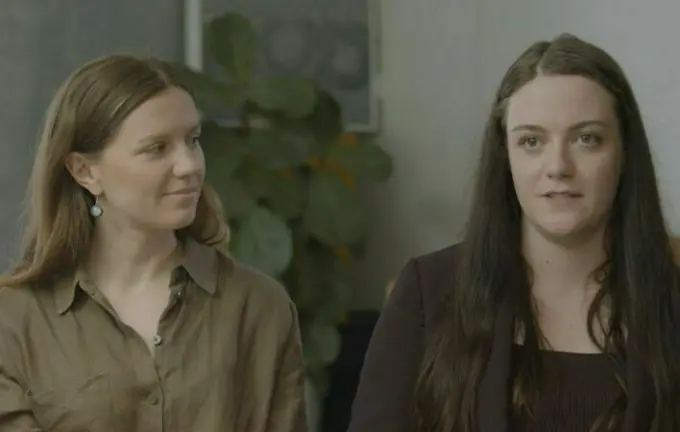
Being prepared to respond with confidence and care
Health and human services need more than standalone training. They need practical approaches that strengthen teamwork, support consistent care, improve staff confidence, and help organisations respond well before, during, and after suicide-related crises. SafeSide supports services across the full continuum of suicide-specific care.
Core Connections
An interactive program that strengthens team connections and resilience, reduces isolation, and supports staff well-being.
SafeSide CARE
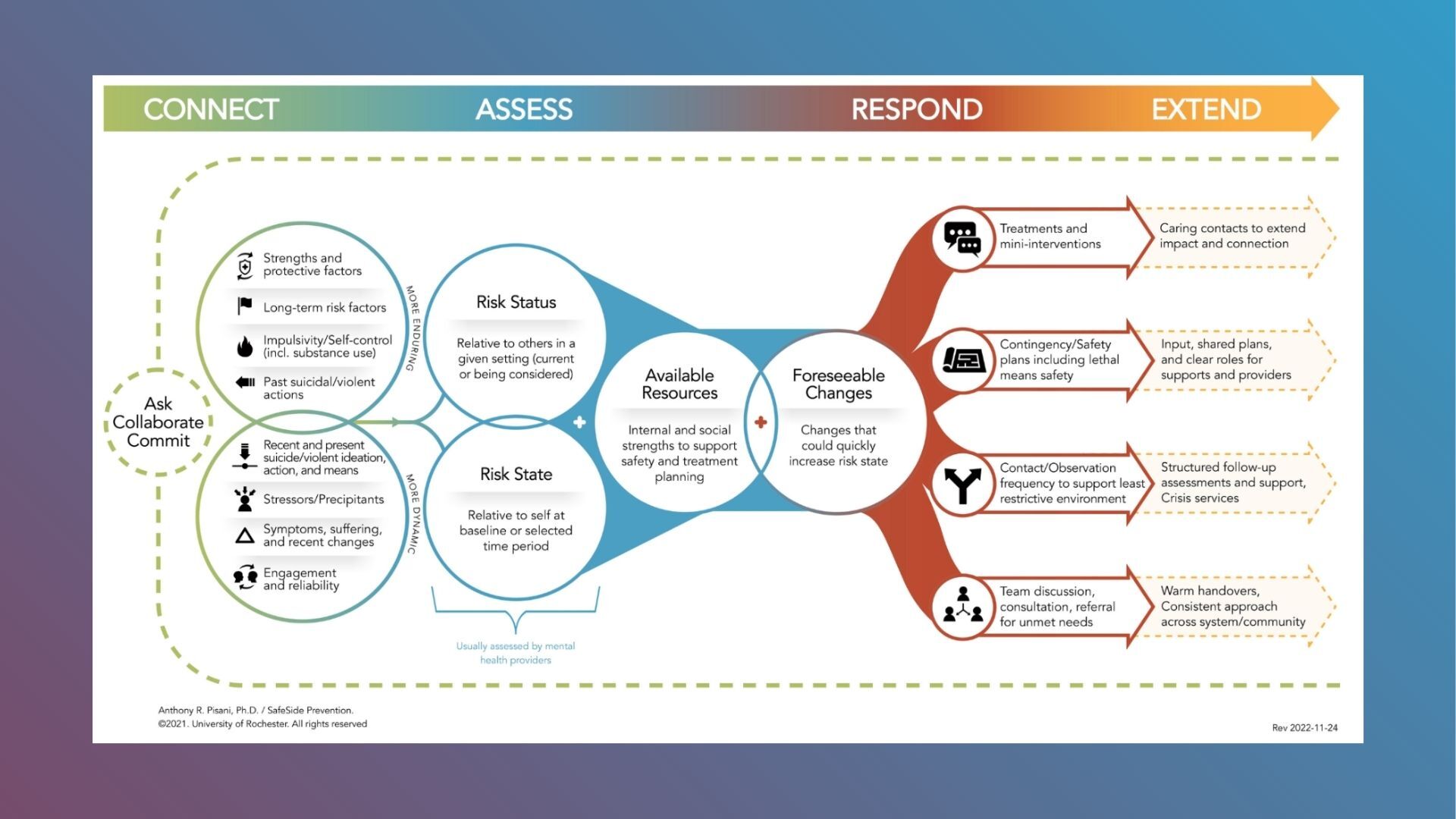
CARE gives clinicians a shared framework for person-centred suicide-specific care, helping organisations build greater consistency, confidence, and collaboration across teams and roles.
CAMS Treatment
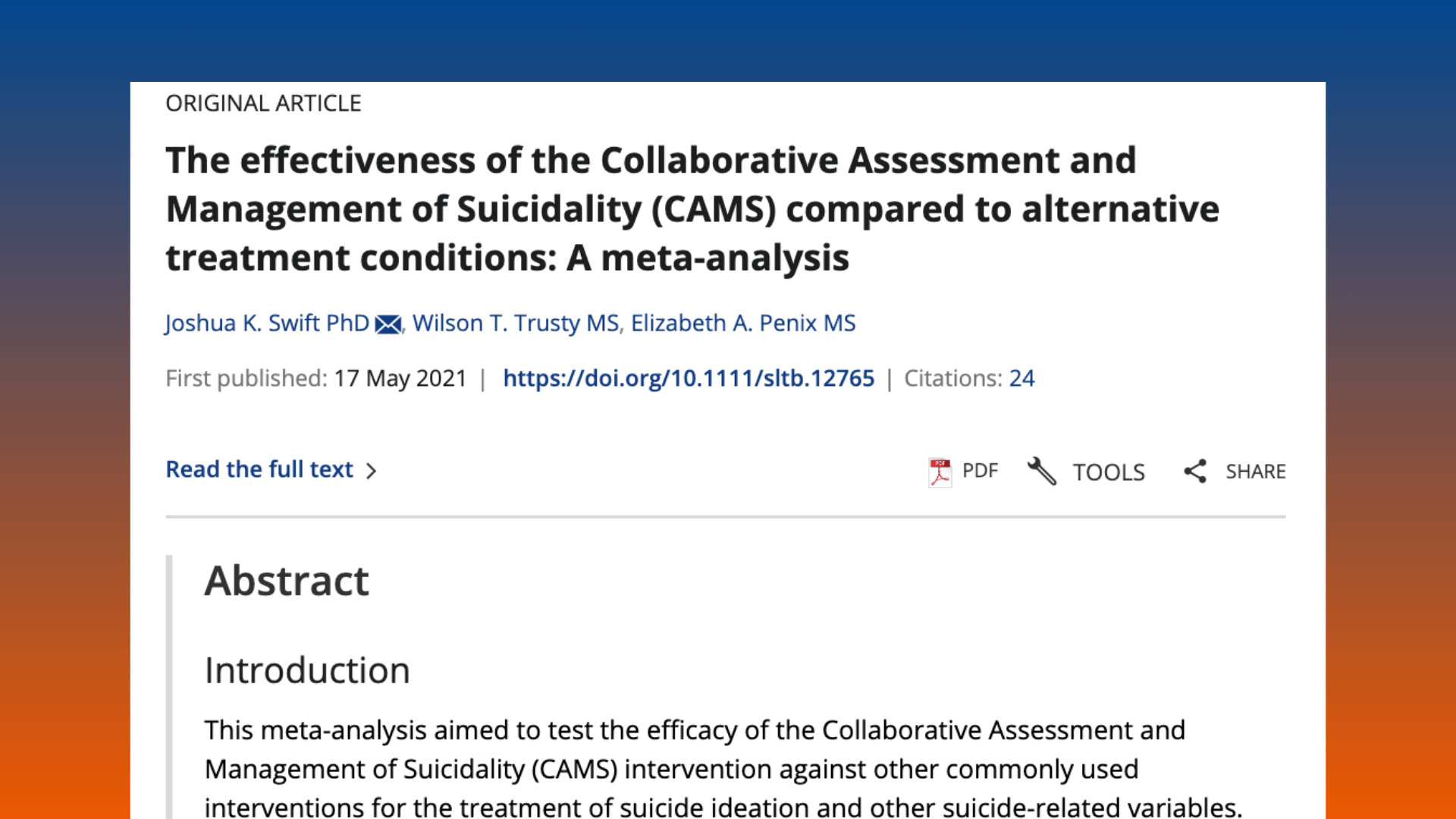
CAMS engages patients as partners in care and supports structured, suicide-specific treatment that helps clinicians address the drivers of suicidal distress with clarity and fidelity.
SafeSide Restore
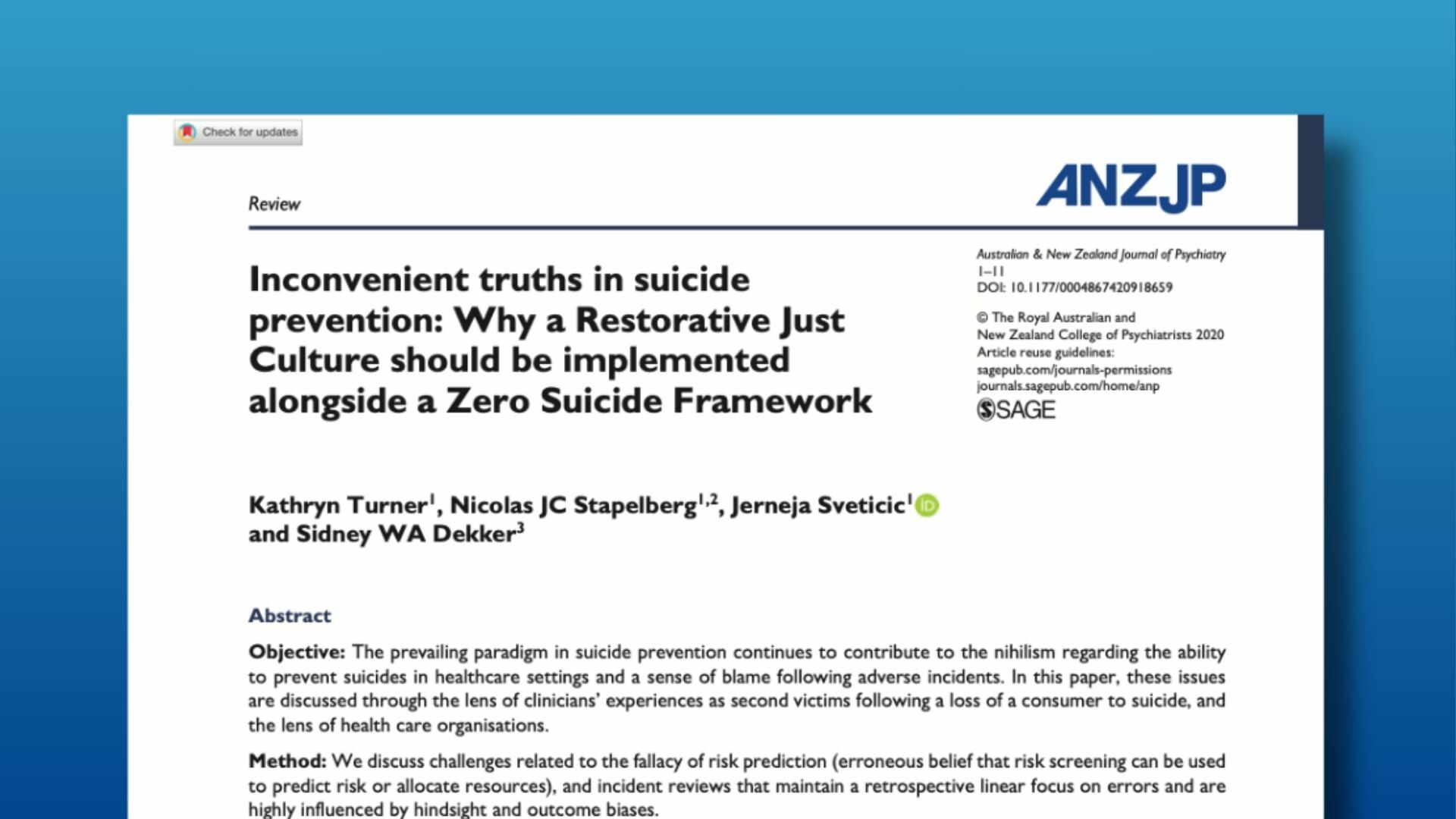
A network that helps services implement post-incident processes that promote healing, improvement, and a restorative learning culture.
When it comes to safety planning, "what" you do matters, but "how" you do it matters more. SafeSide CARE is created through clinical and lived experience expertise and provides evidence-based strategies, such as developing safety plans for foreseeable changes, and engaging support networks.
Safety and Staff Resilience starts here. Support drives it. Results prove it.
SafeSide programs support measurable improvements in workforce confidence, connection, and suicide-specific care practices across clinical settings.
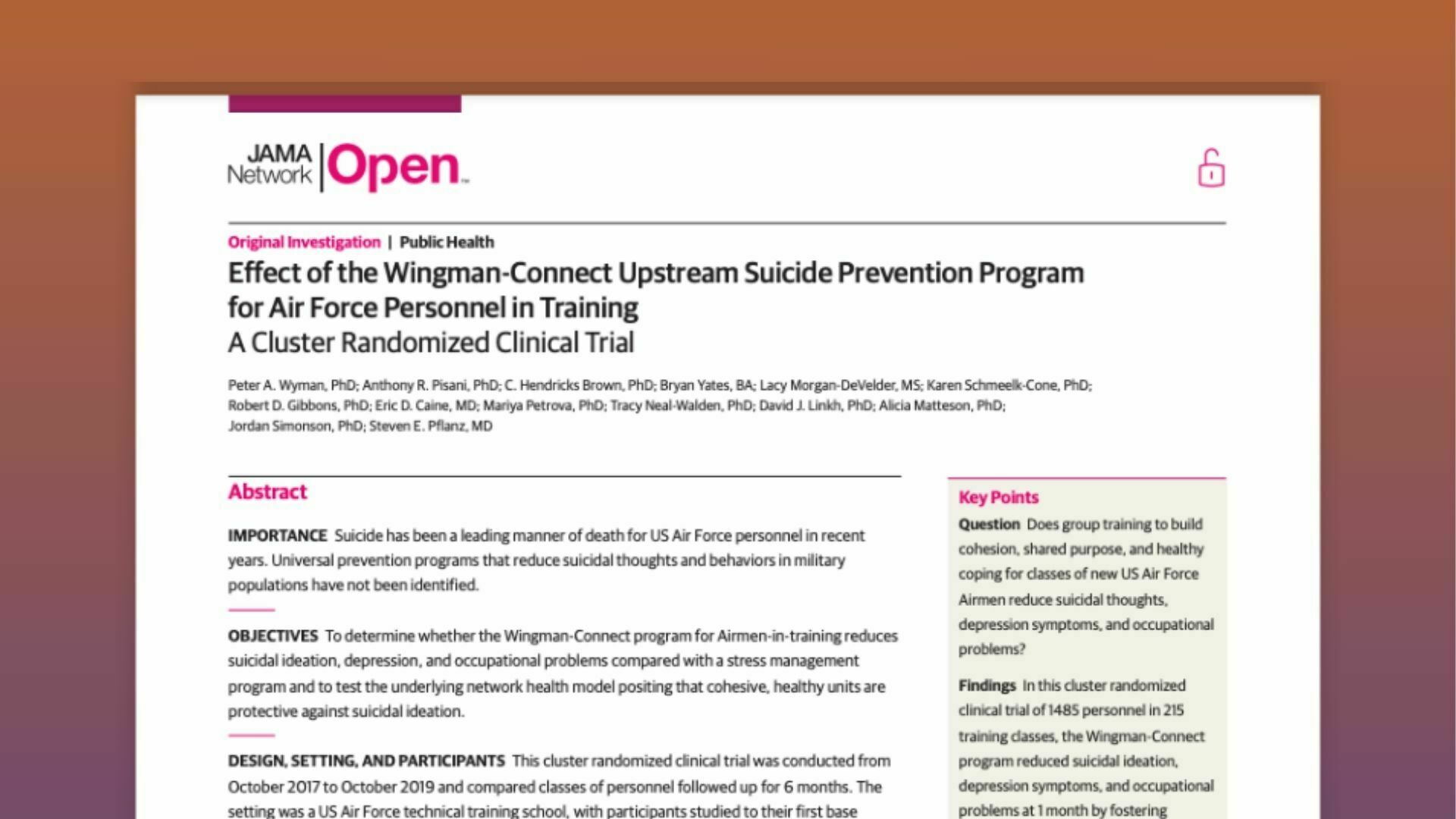
Sessions of CAMS Treatment proven to reduce a patient’s suicidal ideation.
Explore Programs in Detail
Explore the evidence, approaches, and individual SafeSide solutions in more detail.
After suicide-related incidents, services often need support that balances accountability, staff well-being, learning, and compassionate engagement with families and communities.
SafeSide CARE Testimonials
Frequently Asked Questions
SafeSide brings together four connected solutions — Core Connections, SafeSide CARE, CAMS, and Restore — to support clinical services across workforce well-being, suicide-specific care, treatment, and restorative learning after critical incidents.
All programs come with implementation support and consultation, and can include leadership engagement, workforce development, and ongoing partnership, depending on the needs of the service.
Services engage with SafeSide in different ways depending on their goals, workforce needs, and service setting. Some organisations begin with a single workshop or program, while others build longer-term partnerships focused on practice consistency, workforce support, implementation, or culture change across teams and systems.
Once you connect with us, you’ll be guided through a simple step-by-step process — starting with a call to understand your goals, followed by planning and building the right pathway for your context. You can read more about the full process on our What to Expect page.
All programs are designed to fit busy clinical schedules:
- Core Connections: interactive team sessions
- SafeSide CARE: InPlace® video-based workshops with continuous learning
- CAMS: structured training with support
- Restore: ongoing network meetings
Pricing varies by service size and delivery format. Most services find the cost is less than a single lost training day, with the return of stronger teams, more confident care, and consistent practice.
Yes. Many services begin with CARE and CAMS in priority teams, then add Core Connections for well-being and Restore to strengthen culture after incidents.
Core Connections: 4–6 hours of interactive team sessions
CARE: Half-day InPlace® Workshops with ongoing learning
CAMS: Structured training plus fidelity support
Restore: Bi-monthly network meetings
Equip Your Teams. Strengthen Your Services.
Partner with SafeSide to strengthen suicide-specific care, support your workforce, and build more connected health and human services.